Inside WONCA's Young Family Doctors NCD Fellowship
Seven fellows, one global mission: inside WONCA's Young Family Doctors NCD Fellowship
In April 2026, WONCA launched its Young Family Doctors NCD Fellowship, a ten-month programme pairing seven early-career family doctors with experienced mentors from around the world to design and deliver quality improvement projects on noncommunicable disease (NCD) prevention and care. The first cohort came together for orientation on 25 June 2026. Full details of the fellows, mentors and regions involved are in our earlier announcement, WONCA Launches First Young Family Doctors NCD Fellowship Cohort. Here, Dr Steve Mowle, WONCA Treasurer and Chair of the Fellowship Steering Committee, and Dr Mona Osman, Chair, WONCA Special Interest Group on Noncommunicable Diseases and a member of the Fellowship Steering Committee, talk about what the fellowship means for family medicine.
This is WONCA's first cohort of fellows. What is the fellowship about, what does it look like, and why does it matter?
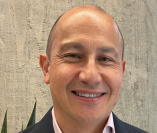
Dr Steve Mowle: This is a big new project for WONCA, and our first fellowship of its kind. We have seven early-career family doctors from around the world, each paired with an experienced mentor, working together over ten months on noncommunicable diseases. It created a lot of interest, with 72 eligible applications for the seven fellow places and around 33 applications for mentor roles. Why does it matter? WONCA often talks about improving education for family doctors worldwide, and here we're operationalising and delivering an education programme ourselves, led by the next generation of family doctors.
Mona, what stands out to you about how the fellowship is set up?
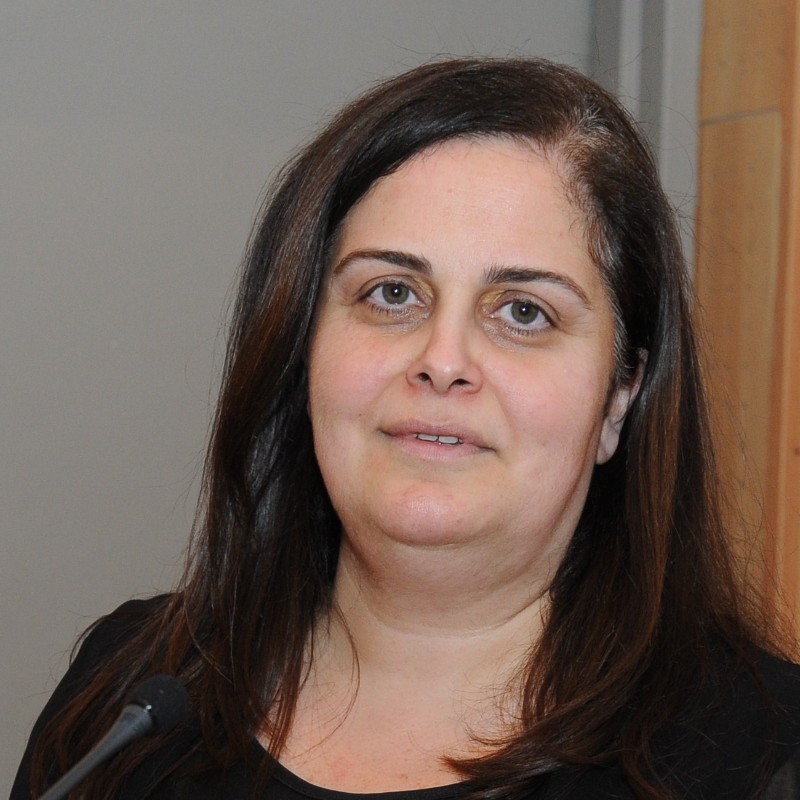
Dr Mona Osman: It's a truly global project, and that's what makes it special. We have fellows from different WONCA regions, young, enthusiastic doctors, mentored by experienced mentors from all over the world. They come with real ideas for improving the management and prevention of noncommunicable diseases in their communities. The structure itself is innovative. Fellows work through several modules, gaining new knowledge, new practices and new implementation skills, while also sharing their own experiences along the way. It's a genuine exchange, not only among the fellows themselves, but between fellows, mentors and those of us on the Steering Committee, with real, global benefit to communities across different countries.
Steve, what do you hope the seven fellows take from this by the end of the year?
Dr Steve Mowle: I hope it's a really special experience for them. As Mona says, they'll get a global perspective on the challenges of NCDs, and insight into how different countries and regions tackle them. I hope they enjoy it too, that's important. But I also hope they come away with a community of other young doctors leading in family medicine, one that stays with them for the rest of their careers. Working with Professor Fabian Dupont, who leads our Young Doctors Movement and is a professor in medical education, has been central to designing a fellowship that truly fits what doctors early in their careers actually need.
Mona, as Chair of the Special Interest Group on NCDs, why does this burden matter so much for family medicine?
Dr Mona Osman: NCDs form the highest burden of disease globally, and they're challenging for patients, providers and health systems alike. Many patients, particularly in lower and lower-middle income settings, don't have access to the right care, knowledge, medication or quality of care they deserve. For providers, treating an NCD is different from treating an acute condition, where you give a prescription and that's it. It takes skill to work with patients and their families, to help change behaviour and to support people in staying on treatment. For health systems, these are costly conditions, often detected late, which can lead to complications such as dialysis or heart surgery. Patients frequently live with several at once, diabetes, hypertension and cardiac disease together. Family physicians see people across the whole life course, which is why we're so well placed to lead on prevention, awareness, early detection and long-term management.
Keeping patients safe over the long term runs through the fellowship. What does safe NCD care look like for a family doctor?
Dr Mona Osman: Safe care for someone living with an NCD is about much more than the prescription. It means empowering patients, giving them the right information and addressing the whole picture, because NCDs are shaped by social, financial and environmental factors, not only clinical ones. Family physicians are well placed to work with those factors and to walk alongside patients across their life course, from prevention and early detection through to long-term management. That's also the focus of this year's World Patient Safety Day, which centres on noncommunicable diseases and on improving self-care and quality of care for people living with them. It sits at the heart of this fellowship: each fellow's quality improvement project is designed to make prevention, screening, care and access safer for patients. We hope to graduate leaders who help keep their patients safe for the long term.
Steve, delivering a programme across so many countries and time zones must be a challenge. How has it worked?
Dr Steve Mowle: It's been quite an organisational feat. We have fellows from Nigeria, Malaysia, Kuwait, Panama, Sri Lanka, Turkey and Argentina, with mentors drawn from around the world and led on the mentoring side by Klaus von Pressentin from South Africa. Fadia Challita, who project-manages the fellowship for WONCA, has kept it all coordinated, linking mentors and fellows so that people aren't getting up at four in the morning to join a call. The practical shape is one-to-one mentoring with specialist experts, monthly workshops and a quality improvement project from each fellow. We're pushing for meaningful key performance indicators, not just a report, so we can show the work has made a real difference for patients.
The WONCA Young Family Doctors NCD Fellowship is funded by an independent educational grant from AstraZeneca.
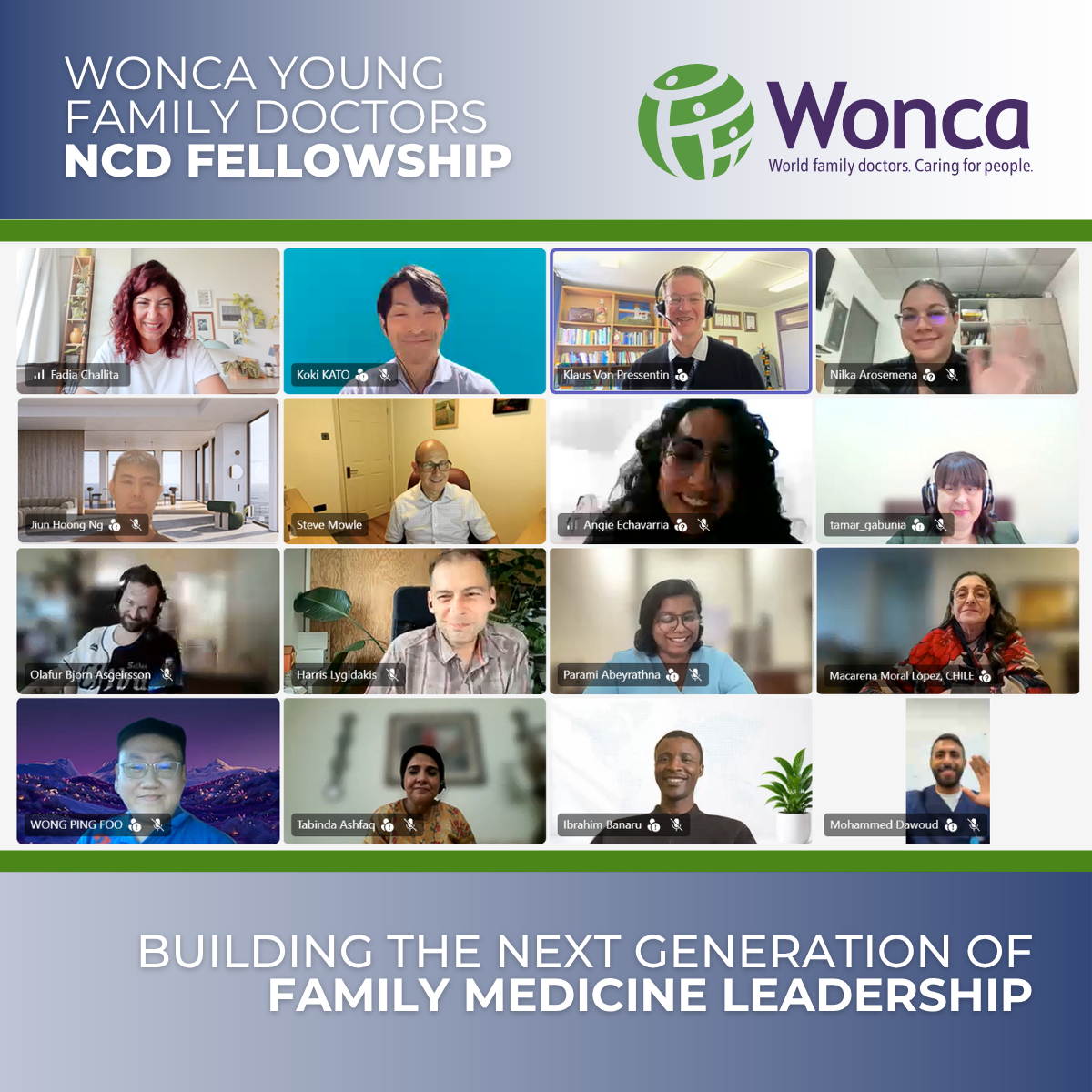
The first cohort of the WONCA Young Family Doctors NCD Fellowship at their orientation session, 25 June 2026.