Continuity of Professional Identity: From Core Values to Future Family Doctors
Why we are embarking on Phase 2 of the WONCA Core Values Project
Dr Anna Stavdal
Past President of WONCA
Leader of the Core Values in Family Medicine project
How does a profession remain itself while the world changes around it? Every profession depends on its ability to renew itself. Scientific knowledge evolves, technologies advance, societies change, and health systems are continually reformed. Yet a profession remains recognisable only if each generation succeeds in preserving its essential identity while adapting its practice to new circumstances.
Family medicine is no exception. Continuity is not only a characteristic of good patient care. It is also a characteristic of a healthy profession.
A profession survives not because it resists change, but because each generation learns which values must remain constant and which practices must evolve. Each generation inherits the professional identity of family medicine, reshapes it, and passes it on.
Across the world, family doctors work under different titles, within different organisational and financing models, and in widely differing cultural and socioeconomic contexts. Yet they share a commitment to providing first-contact, continuous, comprehensive, and person-centred care in the communities where people live. This shared commitment, not organisational structure or payment system, is the foundation of our discipline. Making the foundations of our discipline explicit is only the first step. Ensuring that they are transmitted across generations is the real challenge.
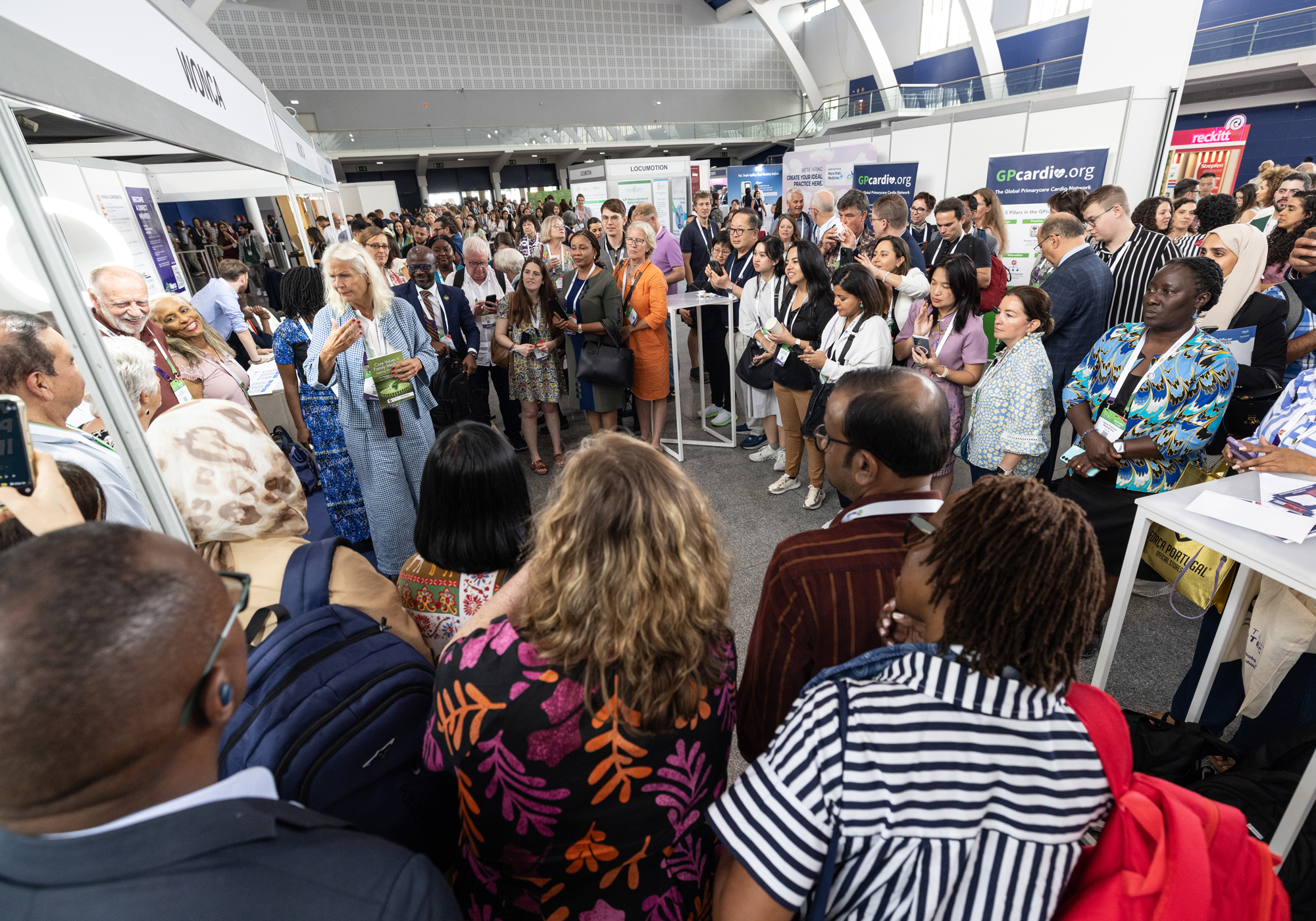
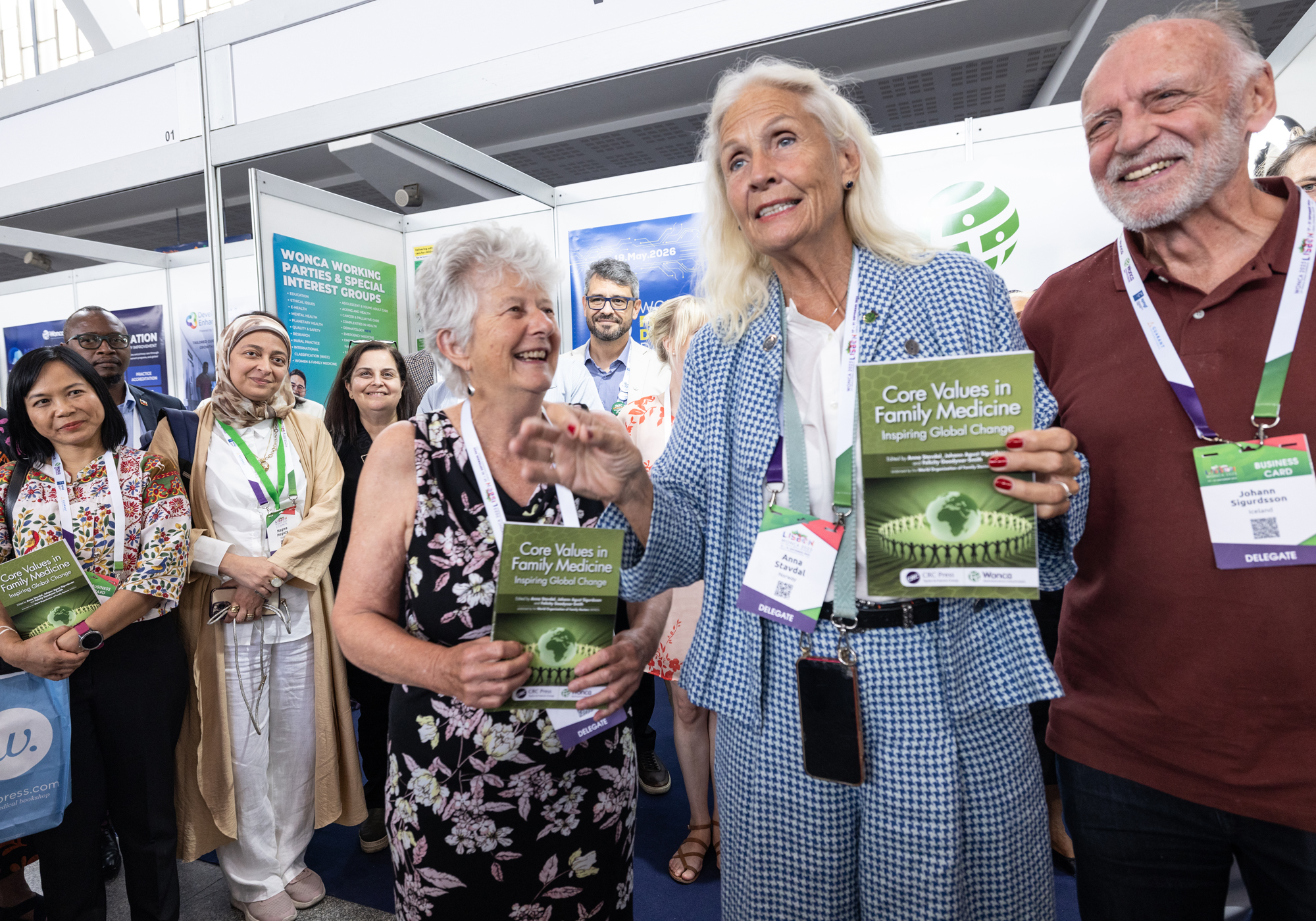
Photo: Launch of the book "Core Values in Family Medicine: Inspiring Global Change" at the WONCA World Conference in Lisbon, September 2025.
Phase 2 of the WONCA Core Values Project builds on the work of defining the shared values of family medicine. It asks the next question: How do the core values of family medicine shape the professional identity of future family doctors? Professional identity is not acquired through lectures or documents alone. It develops gradually through participation in practice, observation of respected role models, dialogue with colleagues, reflection on clinical experience, and belonging to a professional community. If we wish to preserve the values of family medicine, we must pay as much attention to these processes as we do to formal curricula.
The literature is full of competency frameworks, curricula and learning outcomes. Very little asks what exactly is transmitted from one generation of physicians to the next. Is it knowledge? Certainly. Skills? Undoubtedly. But professions survive because something else is transmitted; identity, traditions, norms, ways of thinking, ways of seeing patients. Ways of making clinical judgments. And not least: ways of carrying responsibility. Professional identity is therefore not an educational by-product. It is the principal mechanism through which a profession ensures continuity while remaining open to change.
Core values are not preserved simply because they are written down. They endure because they are lived in everyday practice, taught through education and mentorship, questioned through reflection and scholarship, and renewed by each generation in response to changing societies, changing patient expectations, and changing health systems.
This shifts our attention from defining values to stewarding them. Education therefore becomes the central question. How do we prepare future family doctors not only to master knowledge and skills, but also to inherit, interpret, and further develop the professional identity that define our discipline? How do we ensure continuity of professional identity while encouraging innovation and adaptation?
Professional identity is formed not only through what we teach, but through what learners repeatedly observe, experience, and practise. The hidden curriculum may therefore be as influential as the formal curriculum.
Every generation inherits family medicine from those who came before, not as something to preserve unchanged, but as something to understand, question and strengthen and pass on.
Only a profession with a clear understanding of its own identity can convincingly articulate its contribution to patients, health systems, and society. We need to demonstrate that strong family medicine contributes to better population health, promotes equity, strengthens health systems, and makes effective use of limited resources.
Credible advocacy, however, begins long before we engage with external audiences. It begins with ourselves. We need a common understanding of who we are, what we stand for, and how concepts such as family medicine, general practice, family physician, general practitioner, and generalism relate to one another. Differences in terminology reflect diversity, but they should not obscure our common professional identity. Shared language is not an end in itself; it provides the foundation for shared understanding.
Equally important is a shared understanding of professionalism. Professional identity should not be confused with professional interests. Discussions about remuneration, contracts, and organisational models are both necessary and legitimate, but they are shaped by history, politics, economics, and local circumstances. They will, and should, differ between countries. The values that define family medicine should not. Those values provide continuity while allowing flexibility in the ways they are expressed in different settings.
Family medicine has long recognised continuity as one of the defining characteristics of excellent patient care. Perhaps it is also time to recognise that continuity is also a defining characteristic of a healthy profession. The future of family medicine depends not only on defining our values, but on ensuring that every new generation understands, embodies, and renews them. Stewardship of family medicine is therefore not simply about preserving a discipline. It is about educating the generations that will carry it forward.
Anna Stavdal is Past President of WONCA and leader of the Core Values in Family Medicine project.
About the WONCA Core Values Project
The WONCA Core Values Project was launched in March 2023, building on earlier work in Norway in 2001, across the Nordic countries in 2020, and in Europe in 2022. Phase 1 brought together teams from every WONCA region to explore the vision, mission, values and principles of family medicine in their own contexts, and asked where there is consensus and where understanding diverges according to local culture and health systems. That work is set out in the article Core values in family medicine: Inspiring global change and in the author interview with Felicity Goodyear-Smith, co-editor of the project book.
The book: Core Values in Family Medicine
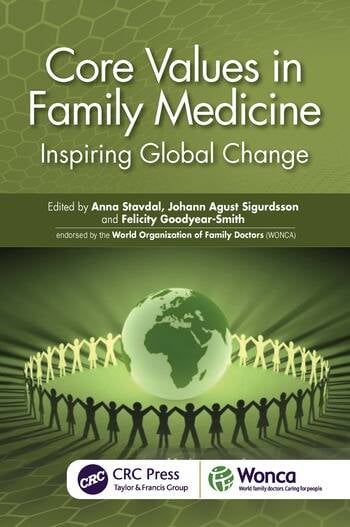
The findings of Phase 1 are gathered in Core Values in Family Medicine: Inspiring Global Change, edited by Anna Stavdal, Jóhann A. Sigurdsson and Felicity Goodyear-Smith. The book documents a global enquiry by teams representing each WONCA region into the vision, mission, values, principles and definition of family medicine, aligned with the WHO definition of primary health care and the goal of universal health coverage.
Order the book
Explore the WONCA Family Medicine Book Series
Watch: from the book launch
A short reflection from Dr Anna Stavdal, recorded at the book launch during the WONCA World Conference, September 2025.
Read more
Core values in family medicine: Inspiring global change
Author interview: Exploring Core Values in Family Medicine
Dr Anna Stavdal's farewell at WONCA 2023, where the Global Core Values Project was first announced.