From the President: A Typhoon and Resilience in Taiwan
 español
By Prof. Viviana Martínez-Bianchi, MD
President, World Organization of Family Doctors (WONCA)
In July, I had the privilege of visiting Taiwan at the invitation of the Taiwan Association of Family Medicine (TAFM), as it prepared to celebrate its 40th anniversary. It was meant to be a special occasion, bringing together family physicians, educators, residents, and leaders to celebrate four decades of advancing our discipline, sharing knowledge, and strengthening the bonds of our professional community.
But Typhoon Bavi had other plans.
As the storm approached Taipei, the organizers faced the difficult decision to cancel much of the planned conference and anniversary celebrations. Months of careful preparation were suddenly disrupted, plans reconsidered, and colleagues who had looked forward to gathering faced uncertainty.
Yet, what might have been remembered as a disrupted conference became one of the most meaningful experiences of my presidency.
Because the heart of family medicine often reveals itself most clearly when things do not go according to plan.
Discovering Taiwan through its people
From the moment I arrived, I experienced the extraordinary warmth and hospitality of our Taiwanese colleagues.
Dr. Wei-Cheng Chiu welcomed me upon my arrival, and we enjoyed a hotpot lunch together before visiting the Museum of Contemporary Art Taipei. It was a wonderful introduction to the city and an opportunity to begin exchanging stories about our lives, our work, and family medicine.
That evening, I joined TAFM President Dr. Cheng-Kuo Huang and colleagues for dinner at the magnificent Grand Hotel Taipei, an iconic landmark overlooking the city. We explored its fascinating history, including its famous underground tunnel, and enjoyed an evening of conversation, friendship, and shared stories.
The Grand Hotel was also where TAFM had planned to hold its 40th anniversary gala dinner and dance, a celebration that colleagues had eagerly anticipated and that, sadly, had to be canceled as the typhoon approached.
Looking back, I feel especially fortunate that we had the opportunity to gather there before the storm. Although the grand celebration could not take place, that intimate evening of friendship and collegiality became a celebration of its own.
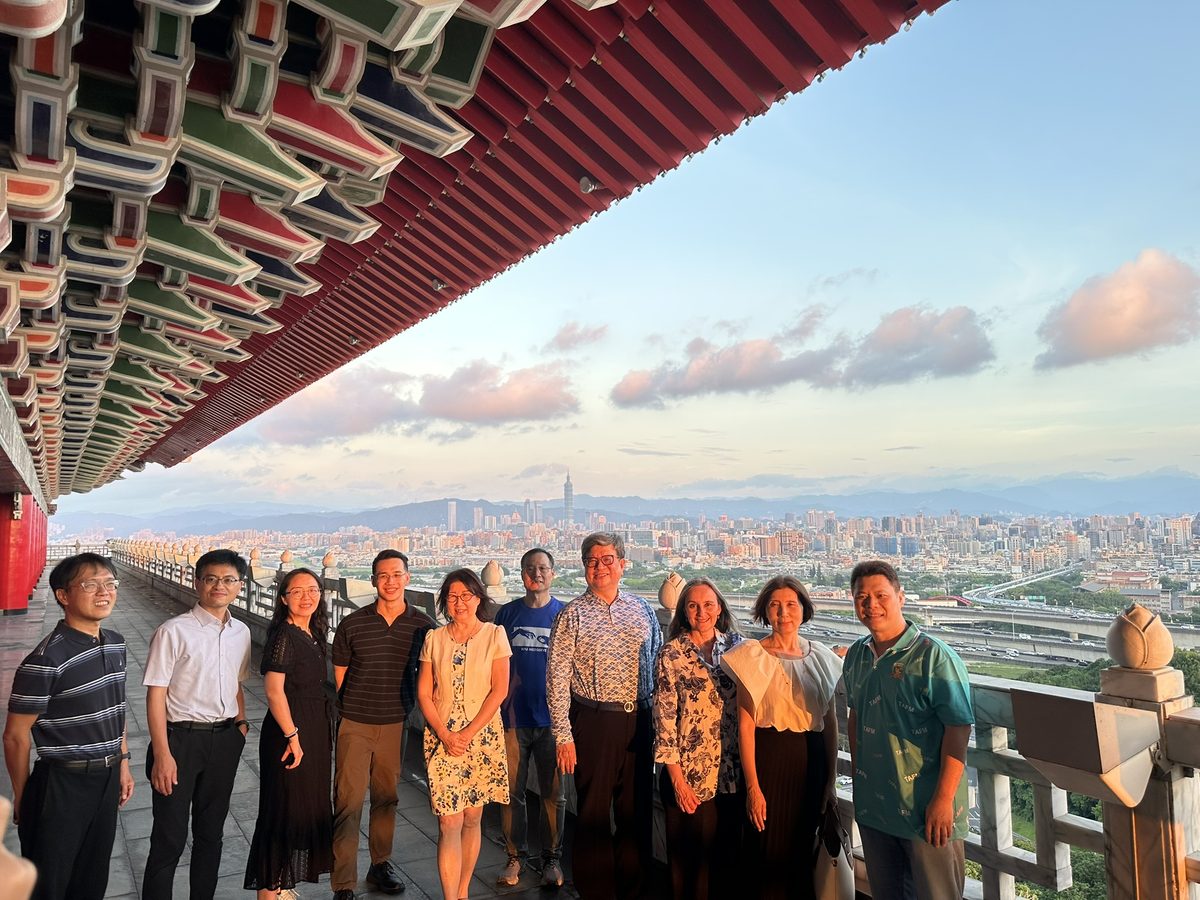
Photo: An evening with TAFM colleagues at the Grand Hotel Taipei, before the typhoon arrived.
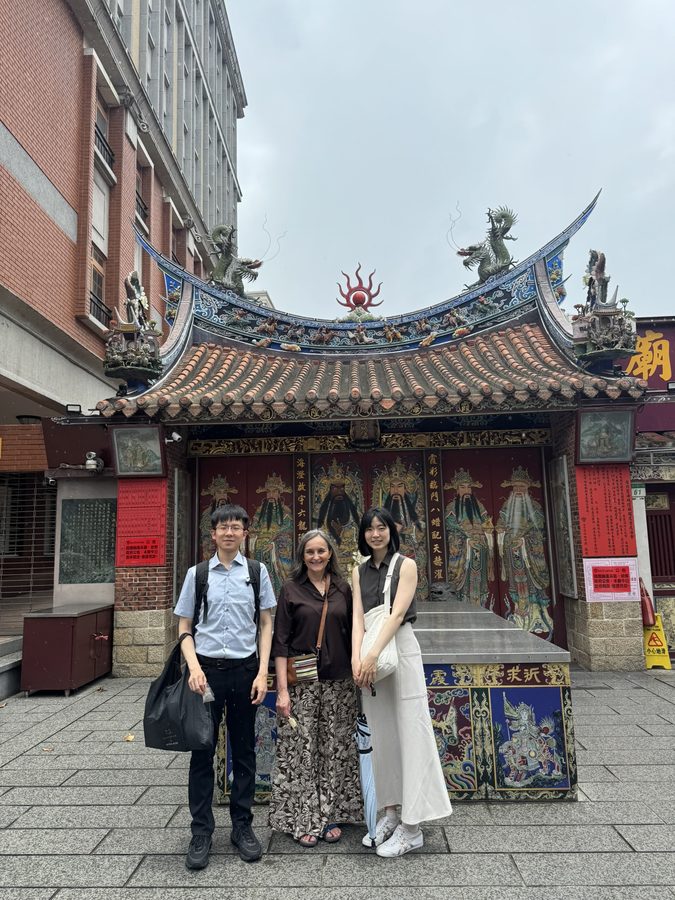
Photo: Exploring Dadaocheng with young family physicians.
The following morning, with the typhoon approaching, two young family physicians, Dr. Ching-En Jason Chou and Dr. Yu-Chung Wu, accompanied me through the historic Dadaocheng neighborhood. Our original plans to visit Taipei 101 were abandoned because of the weather, but what we experienced instead was delightful: a walk through bustling streets, colorful markets, wonderful food, and conversations about life and family medicine.
Seeing a city through the eyes of young colleagues is one of the great privileges of international travel. These informal conversations often teach us as much as our scientific meetings.
Another unexpected pleasure of my visit happened as I was walking along a street near my hotel. I happened to notice a sign on a building identifying the office of the Taiwan Association of Family Medicine. What a wonderful coincidence!
Of course, I couldn't resist stopping by to say hello. My unannounced visit turned into a delightful opportunity to meet the wonderful TAFM team, led by Judy Li, the association's Secretary. These were the people working tirelessly behind the scenes to organize the 40th anniversary celebrations and annual conference, now facing the added challenge of an approaching typhoon.
It was a joy to meet them in person, thank them for their dedication, and recognize the essential work they do to support family medicine in Taiwan. Behind every successful professional association is a team of committed people whose contributions deserve our gratitude and recognition.
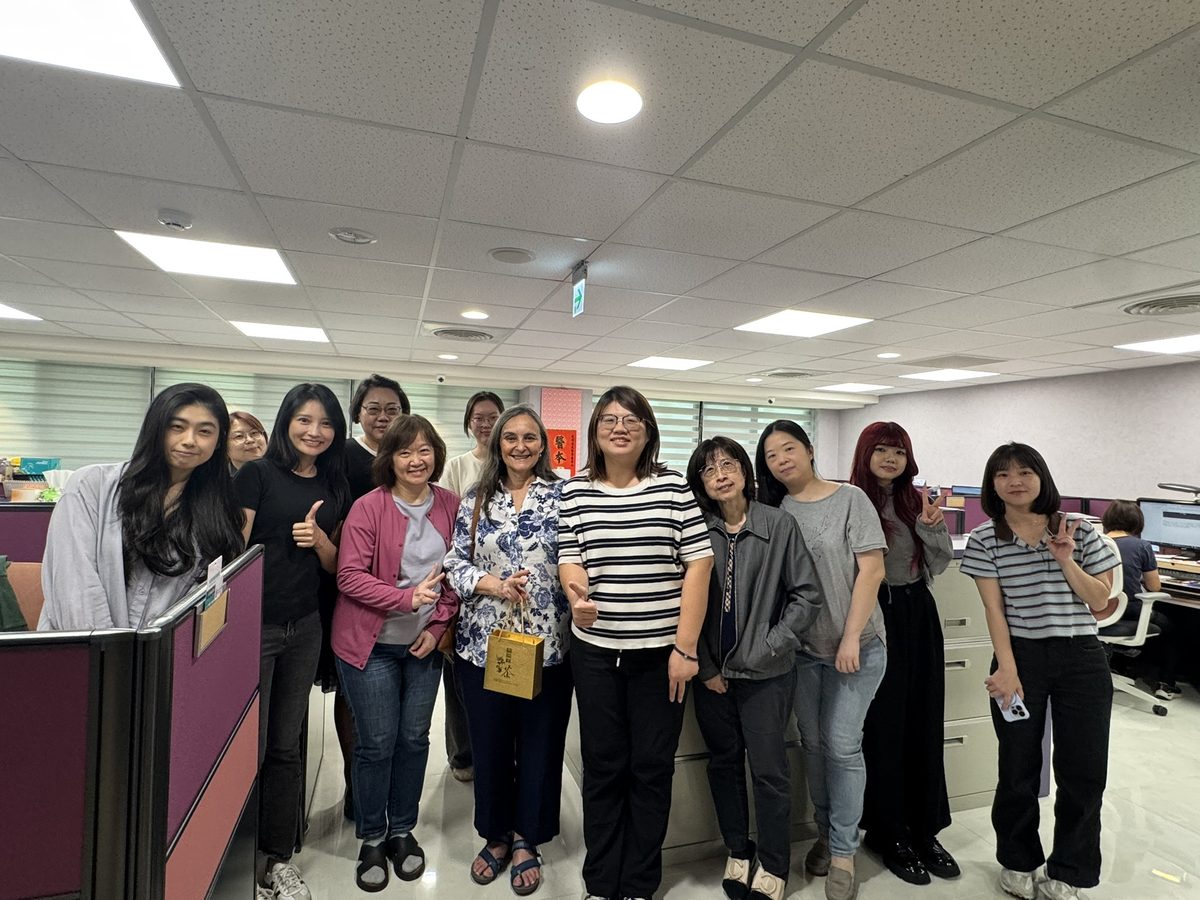
Photo: With Judy Li and the TAFM team at the association's office in Taipei.
Family medicine does not stop for a storm
That Friday afternoon, as Taipei prepared for the approaching typhoon, I visited the Department of Family Medicine at National Taiwan University Hospital.
Faculty and residents were continuing their work in the family medicine clinics and hospital units. As essential healthcare workers, they knew their responsibilities to patients would continue regardless of the weather. Yet, despite everything they had to do, they generously made time to welcome me.
I am grateful to Professor Shao-Yi Cheng, Chair of the Department of Family Medicine, and Dr. Jeff Chyi-Feng Jan for their warm hospitality and the opportunity to meet with faculty, residents, and students.
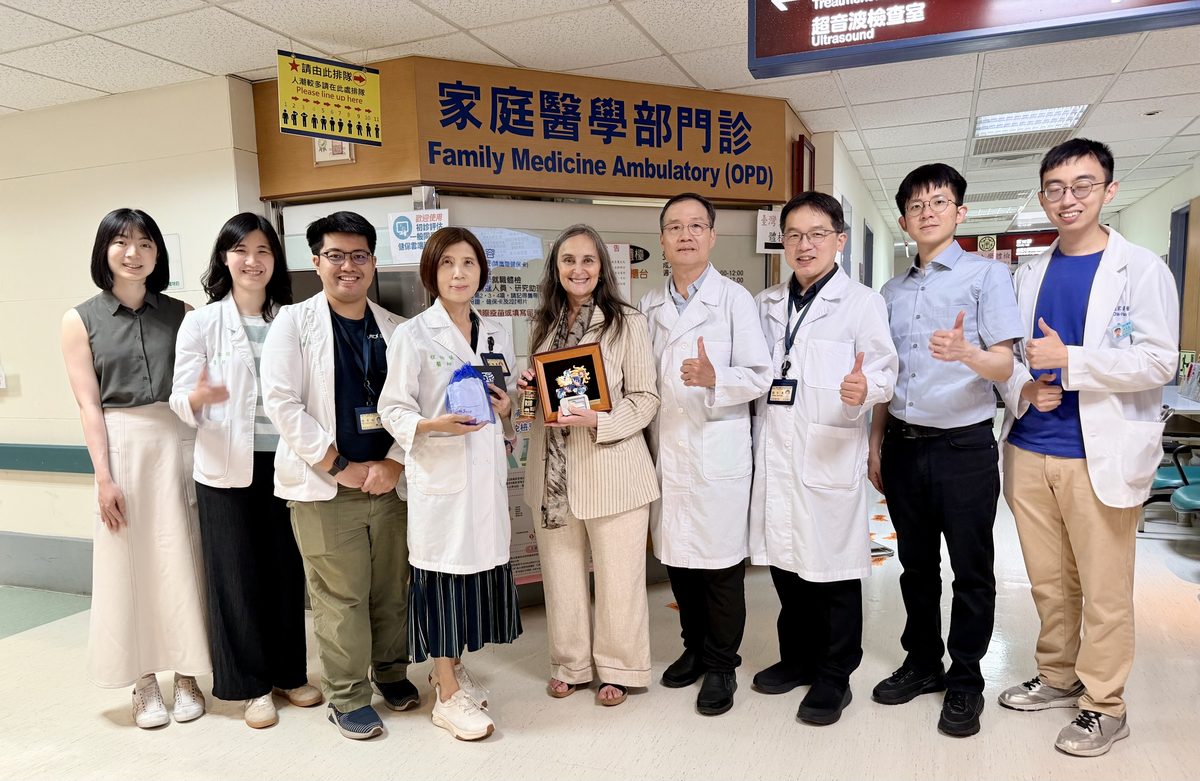
Photo: With colleagues from the Department of Family Medicine, National Taiwan University Hospital.
I learned so much during our conversations. I was impressed by the breadth of the department's clinical and academic work, including cancer screening and prevention, adolescent health, reproductive health counseling, patient advocacy, and community-oriented care. I was excited to learn about their work in geriatrics and palliative care, including their fellowship training in these areas.
As populations age around the world, family physicians have an increasingly important role in helping people not only live longer, but live well, maintain their dignity, and receive compassionate care throughout their lives. Seeing how the department has integrated these priorities into its clinical work, teaching, and training was inspiring.
We also talked about medical education and preparing the next generation of family physicians. I enjoyed meeting the residents and students, hearing about their experiences, and learning how the department approaches training.
What impressed me was the combination of academic excellence, comprehensive care, and the generosity of colleagues who, despite their responsibilities to patients and the approaching storm, made time to share their work and experiences with me. I left National Taiwan University Hospital with new ideas to bring into conversations with colleagues in other parts of the world.
When the conference finally gathered
On Saturday, the typhoon forced the cancellation of the day's conference activities. But by Sunday, July 12, we were able to gather for a modified scientific program.
Sunday morning brought an excellent series of presentations on Taiwan's vision for a healthier population and the role of family medicine in achieving it. We heard from Dr. Chung-Liang Shih, Taiwan's Minister of Health and Welfare; Dr. Chih-Hung Chen, Vice Executive Director of the Healthy Taiwan Promotion Committee; and Professor Tai-Yuan Chiu, who spoke about the role of family medicine in transforming healthcare. Their presentations gave us an opportunity to explore Taiwan's health priorities, the policies being developed to advance them, and the contributions family physicians can make to their success.
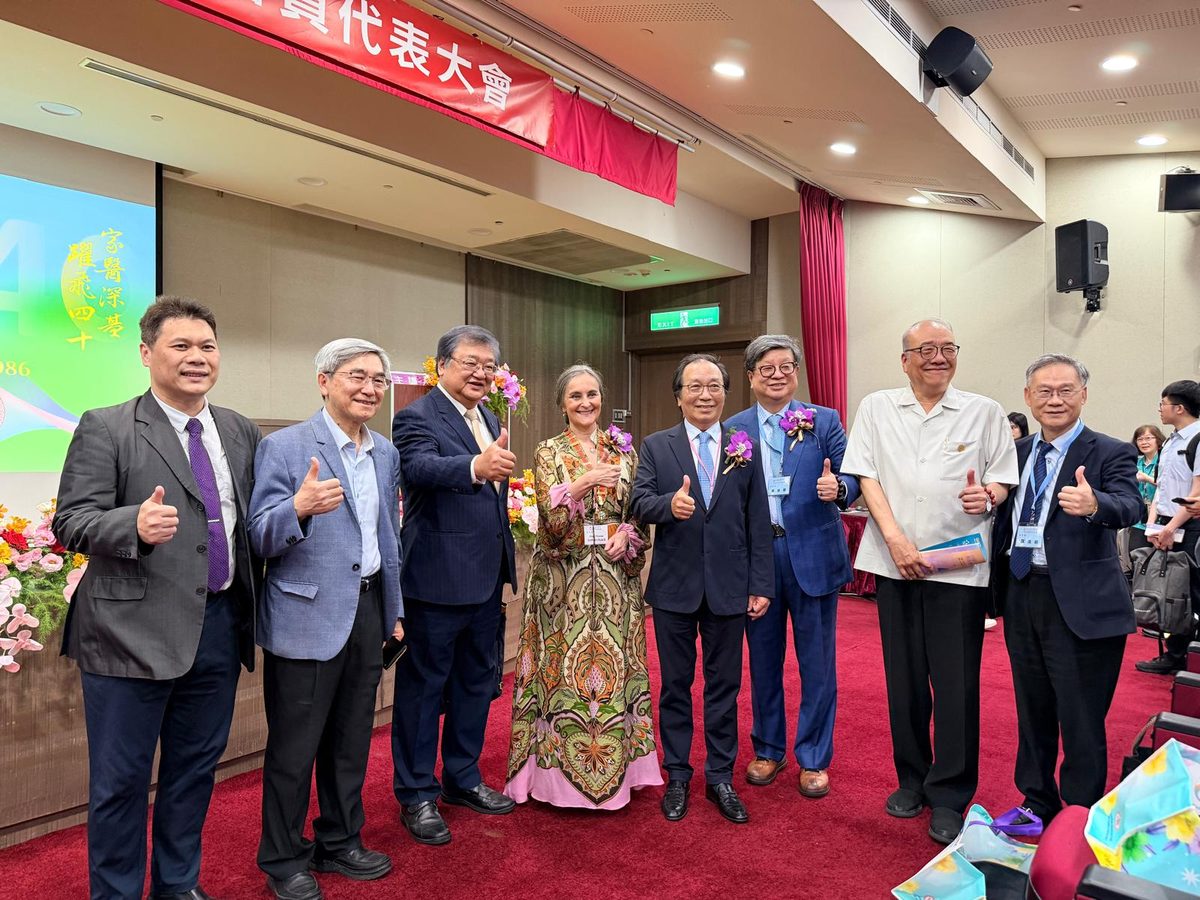
Photo: With some of the leaders who spoke about the Healthy Taiwan initiative.
I was honored to deliver my keynote address, “Family Medicine and the Future of Health: From Healthy Taiwan to Healthy Communities Everywhere.”
One of the things I enjoy most about serving as WONCA President is how much I learn along the way. When I am invited to speak in a country, our colleagues often ask me to address an issue that is particularly important to them or a development that is shaping their health system. Preparing for these presentations gives me an opportunity to learn about their realities, policies, challenges, and achievements.
In Taiwan, I was asked to connect my presentation to the Healthy Taiwan initiative. I spent considerable time studying the initiative and the policies supporting it, and found much that resonated with my own understanding of family medicine and primary health care.
I was impressed by Taiwan's emphasis on prevention and health promotion throughout the life course, from maternal and child health to healthy aging. Taiwan has invested in cancer screening, chronic disease prevention, tobacco control, healthy nutrition, and community-based programs that support healthier lives.
I also appreciated the attention given to reducing health inequalities and reaching communities that face greater barriers to care. The initiative recognizes that improving health requires more than providing medical treatment. It requires supportive environments, health literacy, community participation, and collaboration across sectors.
As I read the Health Promotion Administration's annual report, I was delighted to see explicit references to the Declaration of Alma-Ata, the Ottawa Charter, and the principle of Health in All Policies. These are ideas that have shaped my own understanding of health and the role of family medicine throughout my career. It was encouraging to see these principles reflected in a whole-of-population approach to health promotion, with concrete programs and policies designed to put them into practice.
What struck me was how closely these priorities align with the work of family physicians. We are uniquely positioned to bring prevention, chronic disease management, healthy aging, and community engagement together through continuous relationships with patients and families. The challenge is to ensure that health policies recognize and support this role.
No health system is without challenges, and policies must ultimately be judged by their implementation and their impact on people's lives. But there is much we can learn from examining how different countries are approaching the shared challenges of aging populations, chronic diseases, health inequities, and the sustainability of healthcare systems. My keynote explored these challenges, along with the opportunities presented by technological innovation, artificial intelligence, and new approaches to care.
After witnessing the dedication of colleagues at National Taiwan University Hospital as the typhoon approached, the importance of strong and resilient health systems felt especially immediate.
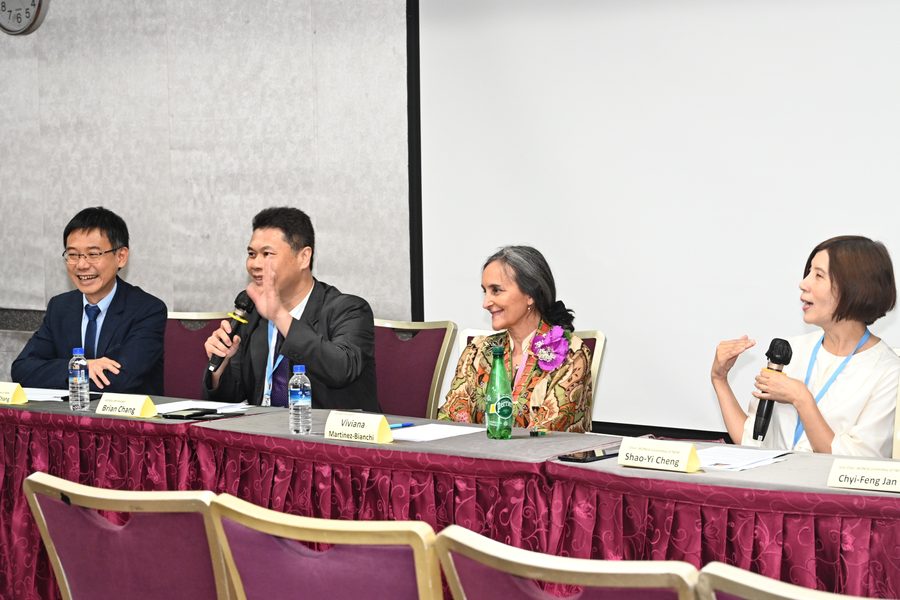
Photo: With Dr. Brian Chang and TAFM colleagues during the dialogue with young family physicians.
Later that afternoon, I joined Dr. Brian Chang, President of WONCA Asia Pacific Region, and other Taiwanese colleagues for a wonderful dialogue with young family physicians about leadership, international collaboration, career development, and the future of primary care. I loved hearing their questions, their aspirations, and their ideas about the future of our profession. We need to create opportunities for young family physicians to participate in leadership today, not just prepare them to become leaders tomorrow.
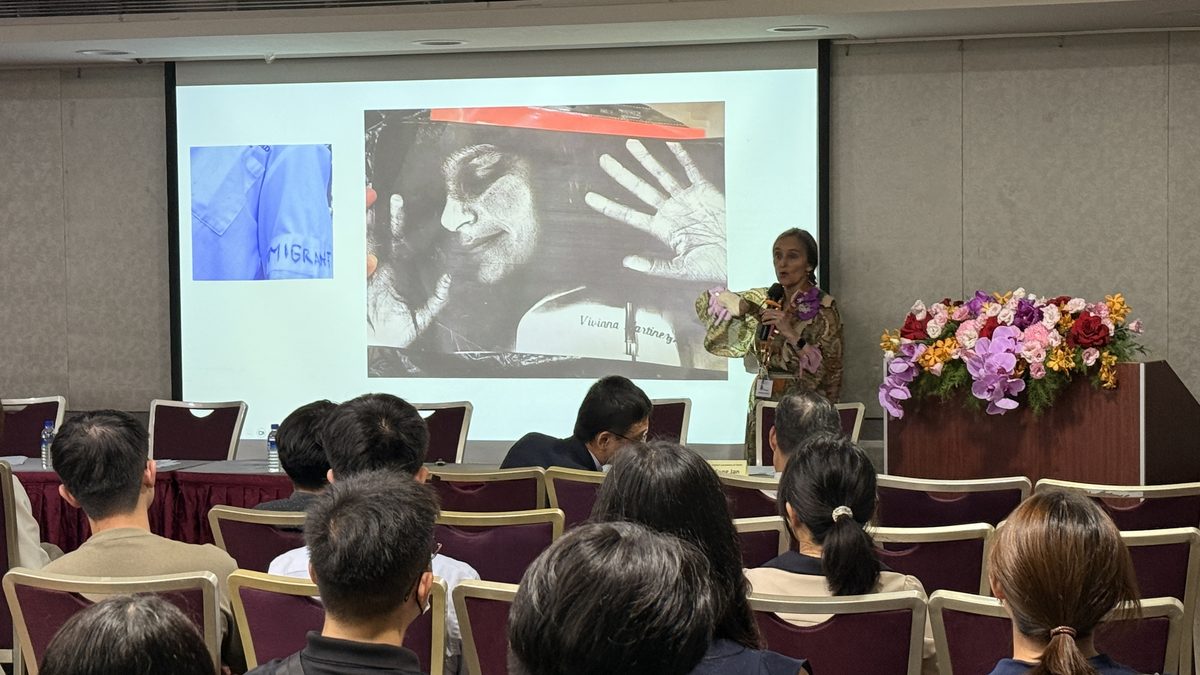
Photo: Speaking with young family physicians during the afternoon session.
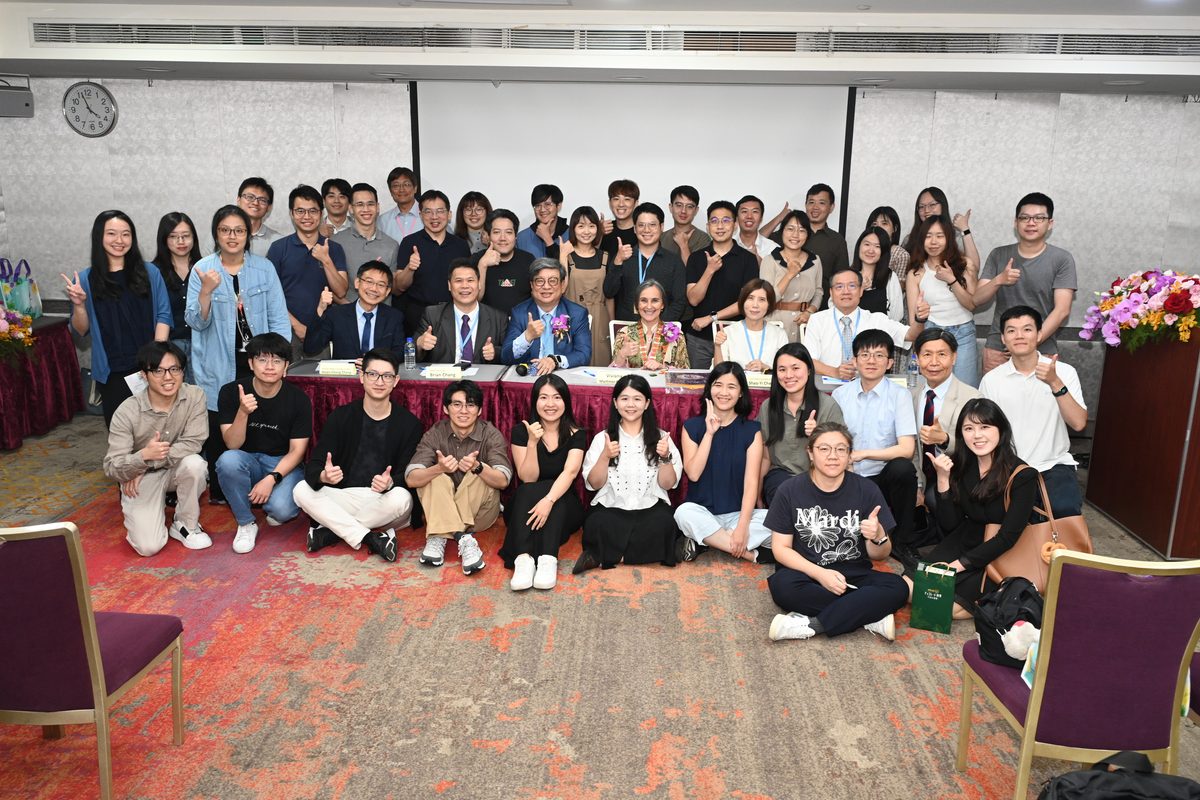
Photo: With young family physicians after the dialogue on leadership and the future of primary care.
Celebrating forty years and the people who make it possible
Although the typhoon changed the celebrations that TAFM had envisioned, it could not diminish the significance of forty years of dedication to family medicine in Taiwan.
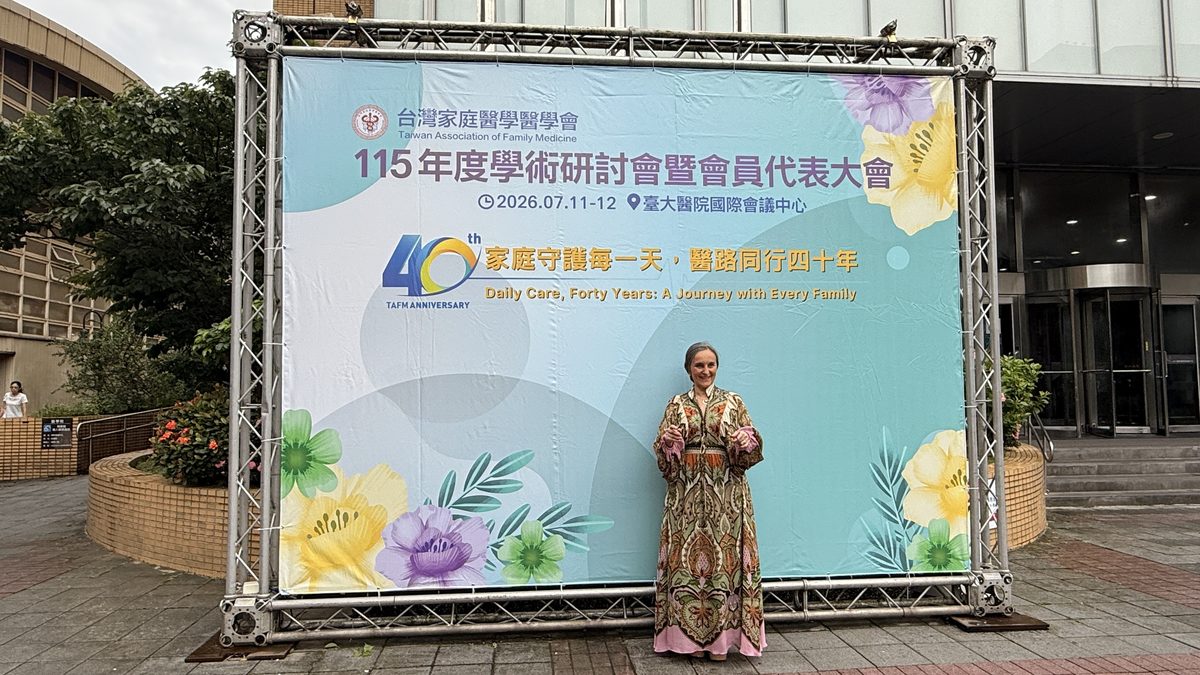
Photo: At the TAFM Annual Conference, marking the association's 40th anniversary under the theme “Daily Care, Forty Years: A Journey with Every Family”.
The anniversary gala dinner and dance could not take place, but TAFM's leadership found other ways to celebrate. On Sunday evening, TAFM President Dr. Cheng-Kuo Huang hosted a wonderful President's Welcome Dinner, bringing together Taiwanese colleagues, international guests, and family physicians who had traveled from mainland China. After all the uncertainty of the preceding days, it was a joy to be together, sharing stories, laughter, and friendship. The celebration was different from what had been planned, but no less meaningful.
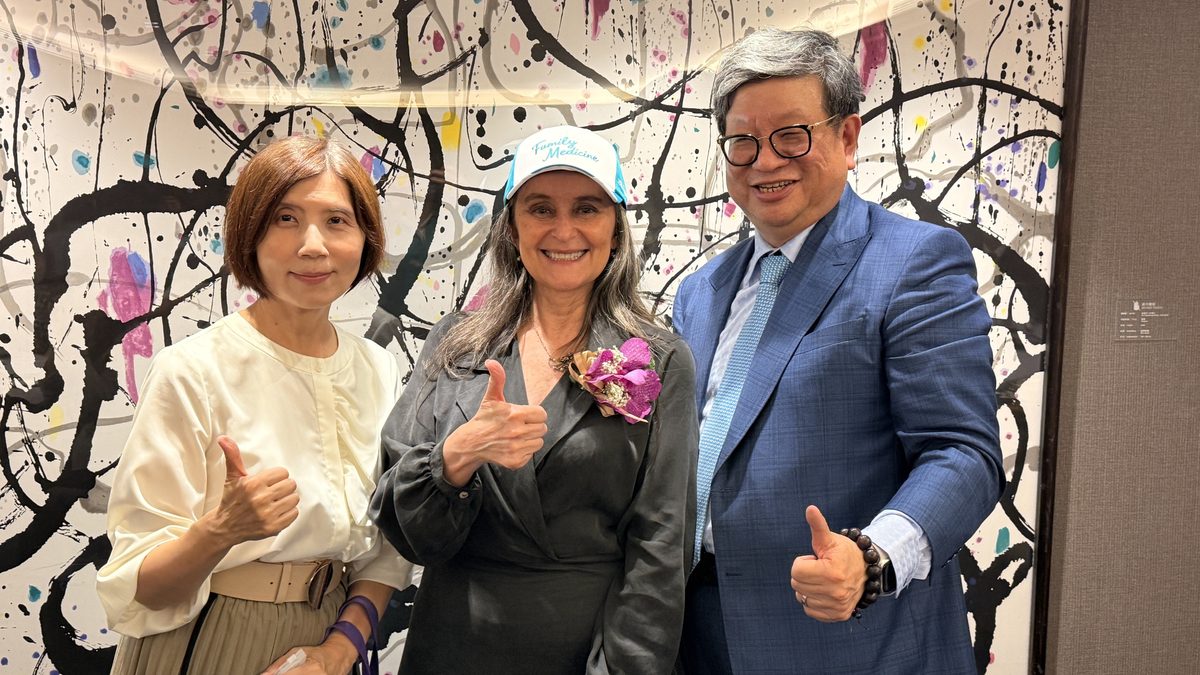
Photo: At the President's Welcome Dinner hosted by TAFM.
I am deeply grateful to TAFM President Dr. Cheng-Kuo Huang; Dr. Brian Chang, President of WONCA Asia Pacific Region; Professor Meng-Chih Lee, Past President of WONCA Asia Pacific Region; Professor Shao-Yi Cheng; Dr. Jeff Chyi-Feng Jan; Dr. Hsien-Cheng Chang; the faculty, residents, and students at National Taiwan University Hospital; the young physicians who shared their city with me; and Judy Li and the dedicated TAFM staff who worked so hard to make the visit and conference possible.
Building relationships across countries and cultures has always been one of the great joys of my life. As WONCA President, I have the privilege of doing this with colleagues who share my passion for family medicine. Our conferences give us opportunities to exchange knowledge, and our organizations give us a collective voice. But it is the friendships, trust, and shared commitment to the communities we serve that make these connections so valuable.
I arrived in Taiwan looking forward to celebrating forty years of family medicine and exchanging ideas about its future. I could never have anticipated how those few days would unfold, or how much I would take home from the experience. I left grateful for the generosity of my Taiwanese colleagues, the conversations we shared, and the friendships that I hope will continue for many years.
The typhoon changed our plans, but it did not change our purpose.